

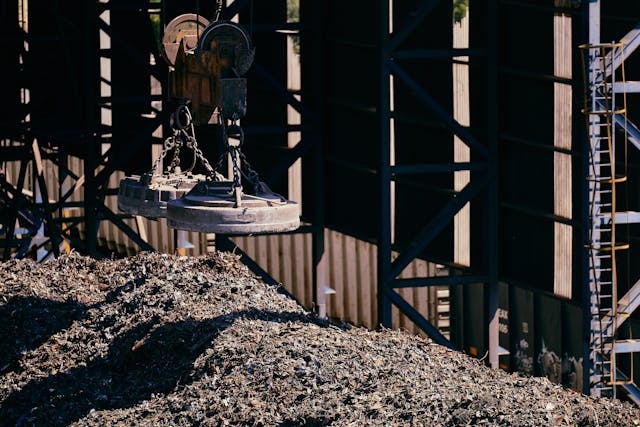
Global scrap markets are no longer linear systems where materials move from waste generators to local recyclers. Instead, they function as complex circulation ecosystems where materials continuously move between industries, countries, and processing centers. However, inefficiencies in logistics, pricing, and supply visibility still limit full market potential.
An international scrap circulation network solves these challenges by enabling continuous movement and redistribution of scrap materials across global recycling value chains. It connects suppliers, aggregators, processors, exporters, and industrial buyers into a structured flow system that maximizes material utilization and market value.
What Is an International Scrap Circulation Network?
An international scrap circulation network is a global system that enables continuous flow, redistribution, and trading of scrap materials across multiple markets and industries.
Unlike static supply chains, circulation networks ensure materials are reused, reprocessed, and redirected based on demand cycles and industrial requirements.
Core Functions
- Continuous scrap redistribution across markets
- Global buyer-supplier connectivity
- Material reprocessing and upgrading
- Cross-border scrap movement
- Dynamic pricing alignment
- Circular economy optimization
How International Scrap Circulation Networks Work
Step 1: Scrap Generation
- Scrap originates from multiple sectors:
- Manufacturing industries
- Construction and demolition sites
- Automotive production
- Mining and metallurgy
- Consumer waste streams
Step 2: Collection and Aggregation
- Scrap is collected and grouped based on:
- Material type
- Quality grade
- Industry category
- Contamination level
Step 3: Processing and Circulation Routing
- Materials are directed to appropriate destinations:
- Recycling plants
- Smelting facilities
- Export hubs
- Secondary manufacturers
Step 4: Global Redistribution
- Processed scrap is redistributed across international markets based on demand.
- Buyers include:
- Industrial manufacturers
- Commodity traders
- Recycling processors
- Construction companies
Step 5: Continuous Market Loop
- Materials re-enter production cycles, ensuring continuous circulation rather than one-time disposal.
Types of Scrap in Circulation Networks
Metal Scrap Flow
- Copper
- Aluminum
- Steel
- Brass
- Zinc
Plastic Scrap Flow
- PET bottles
- HDPE containers
- LDPE film
- PP industrial waste
- PVC materials
Paper and Fiber Flow
- Cardboard waste
- Mixed paper
- Industrial pulp
- Kraft paper
Industrial Byproducts
- Slag
- Fly ash
- Rubber waste
- Chemical residues
Benefits of International Scrap Circulation Networks
1. Continuous Material Utilization
- Scrap materials remain in active circulation instead of being discarded.
2. Higher Market Efficiency
- Real-time redistribution ensures materials reach highest-value markets.
3. Improved Pricing Stability
- Dynamic circulation reduces regional price distortions.
4. Reduced Environmental Waste
- Less landfill dependency and lower environmental impact.
5. Global Market Access
- Suppliers gain exposure to international buyers.
Challenges in Scrap Circulation Networks
Fragmented Supply Chains
- Small suppliers operate independently without integration.
Quality Variation
- Inconsistent grading affects global pricing accuracy.
Regulatory Barriers
- Cross-border scrap movement requires compliance with environmental laws.
Logistics Complexity
- Global transport coordination adds operational difficulty.
How to Choose a Scrap Circulation Network Platform
Strong Global Connectivity
- Platforms should support multi-country scrap movement.
Transparent Pricing Systems
- Real-time or indexed pricing improves trust.
Integrated Logistics Support
- Freight, warehousing, and customs support are essential.
Verified Supplier Base
- Ensure material authenticity and compliance.
Scrap Circulation and Circular Economy Impact
- International scrap circulation networks are essential for circular economy development.
- They help:
- Reduce raw material extraction
- Increase recycling rates
- Minimize landfill waste
- Improve industrial sustainability
- Support closed-loop production systems
FAQs
What is an international scrap circulation network?
- It is a global system that enables continuous movement and redistribution of scrap materials across industries and countries to maximize reuse and recycling efficiency.
How is it different from traditional scrap trading?
- Traditional trading is linear, while circulation networks ensure continuous reuse and redistribution across global markets.
What materials are included in scrap circulation systems?
- Metals, plastics, paper, and industrial byproducts are commonly circulated.
Why is scrap circulation important?
- It improves resource efficiency, reduces waste, stabilizes pricing, and supports sustainability goals.
Who uses scrap circulation networks?
- Recyclers, manufacturers, exporters, scrap traders, and industrial buyers use these systems.
Conclusion
- An international scrap circulation network transforms static scrap trading into a dynamic global flow system. It ensures continuous reuse of materials, improves pricing efficiency, and strengthens the global recycling ecosystem.
- As industries move toward sustainability, circulation-based scrap systems will become essential for efficient resource management and circular economy growth.